Learn about Māori culture
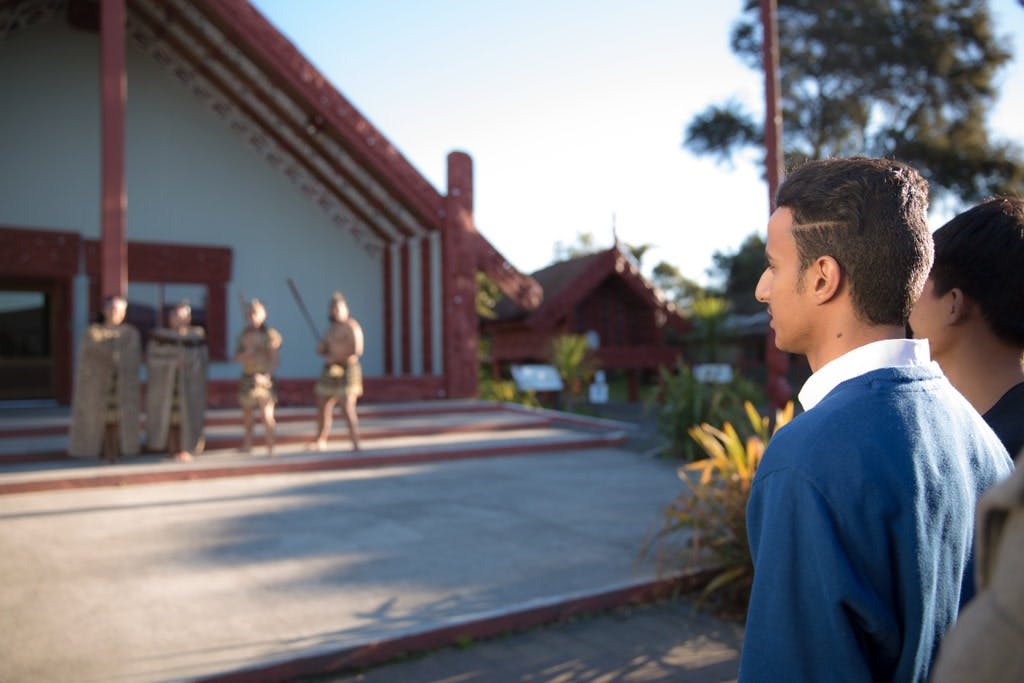
Do you know Māori culture and language are essential to the identity of modern day Aotearoa New Zealand?
Learn how our indigenous culture shaped our past and inspires our future.
To get you started with this goal, we asked students what they did to learn about Māori culture while they were in New Zealand. Here are their suggestions, along with a few of our own!
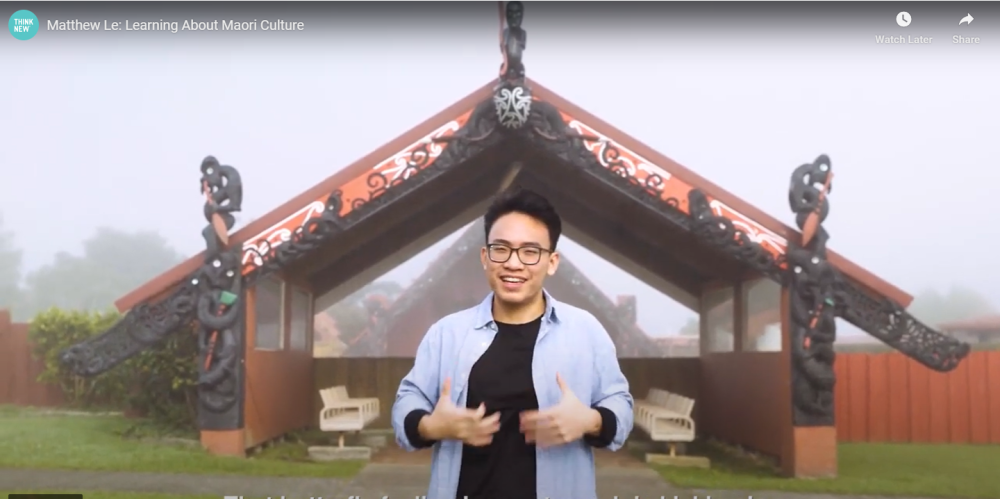
What is the heart of your community? In Māori culture it's the marae. These Māori meeting grounds or Māori community facilities are usually bordered by a fence and contain buildings for specific functions that are often decorated with traditional carvings.
Marae are symbols of tribal identity and are considered to be tūrangawaewae – a standing place, a place of belonging. Every marae includes a meeting house (wharenui) and a dining hall (wharekai). These are used for important events like funerals, tribal celebrations and educational workshops. A marae has spiritual and cultural significance and belongs to a tribe, sub tribe or family – so you'll need a formal welcome (pōwhiri) to enter.
Most universities have a marae where a pōwhiri is organised for new students. Check if there is one on your campus or nearby, and make sure you've prepared for the experience.(external link that opens in a new tab)
This founding document is unique – a treaty between many Māori rangatira (chiefs) and the British Crown. Te Tiriti o Waitangi was signed in 1840 and represents an agreement between both groups on governance and rights over resources, although the accuracy of its translation from English into Māori continues to be discussed and debated. The history of New Zealand is rich and complicated and we invite you to find out more about it. We mark the signing of Te Tiriti o Waitangi with a public holiday each year on February 6.
You can explore a version of the Te Tiriti o Waitangi online(external link that opens in a new tab) or if you are in Wellington visit He Tohu(external link that opens in a new tab) at the National Library. If you are in Northland you can visit the Waitangi Treaty Grounds(external link that opens in a new tab) where the treaty was first signed. It's about a 3 hour drive north of Auckland.
Kapa haka is an expression of cultural identity and a Māori performance art. It translates directly as 'kapa', meaning line, and 'haka', meaning dance – you'll notice performers are often organised into lines on stage.
Performances are an emotional and energetic experience. They can include choreographed weapon and fight sequences, poi (movement with a lightweight ball on a string), singing, chanting and pūkana (facial expressions).
If you can't find a kapa haka group near you, here are a few locations you can experience a live performance(external link that opens in a new tab) in other parts of the country.
Do you know you can learn Māori by taking photos? Use your camera to discover the Māori word for objects around you. You can download the Kupu app on Google Play(external link that opens in a new tab) or the App Store(external link that opens in a new tab).
We have three official languages in New Zealand: English, te reo Māori and New Zealand Sign Language. This means you'll often see signs in both English and Māori. If you're at a public art gallery, museum or the airport, count how many signs you can see in both languages. Are there any Māori words you haven't seen before?
Do you feel like you've achieved this goal?
Send us a photo of your experience! Tag us on Instagram using #studywithnz. Sharing your experience can help other students with ideas on how to learn about Māori culture in New Zealand.
Try a new goal, there's always something new to discover.
Get useful information and important updates to make your life easier while you're living and studying in New Zealand.
Related pages
Speaking te reo Māori
Te reo Māori (the Māori language) is one of three official languages in New Zealand, along with English and New Zealand Sign Language. Find out how to pronounce it, where to learn it and some common words.
Life and culture in New Zealand
Settling in a new country is easier if you know a little about its culture and lifestyle. Learn about New Zealand and Māori culture and traditions, and the lifestyle here.
Live like a local
Finding cool places to eat, knowing clever ways to save money or feeling at home in your new city or town? Whatever your answer, here's a few things you can do to make progress – fast!